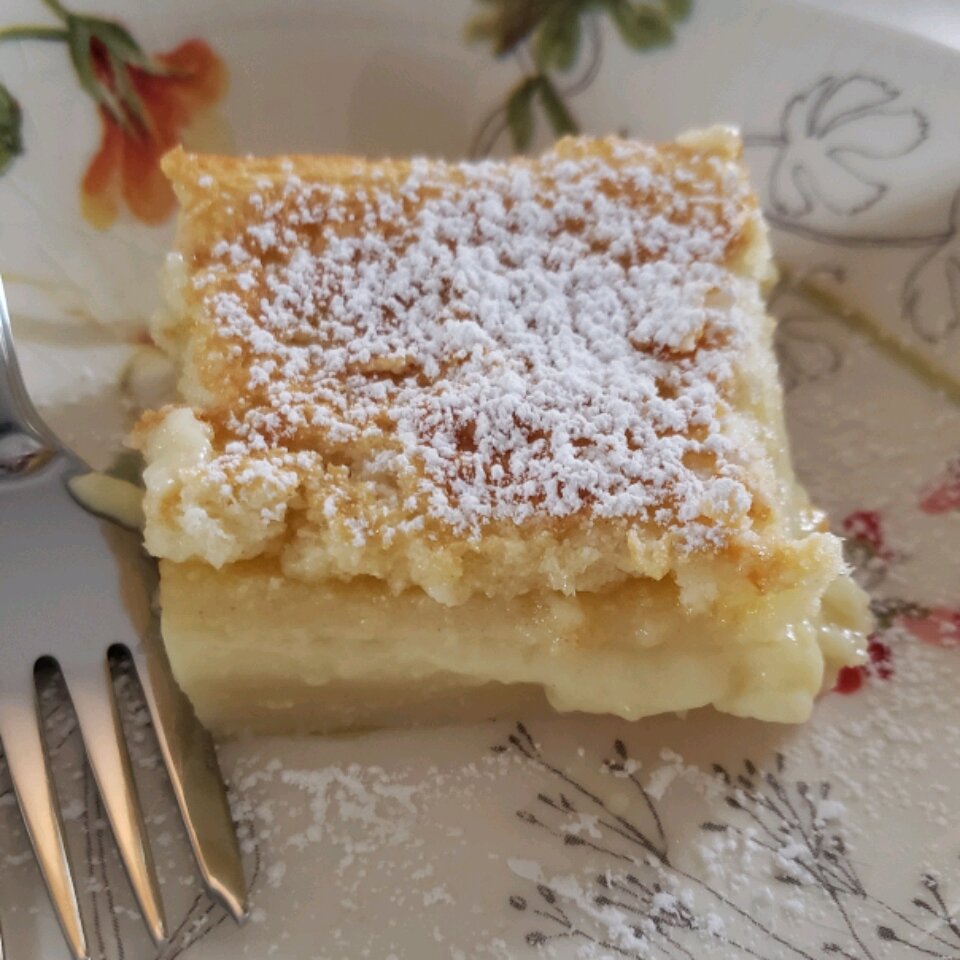
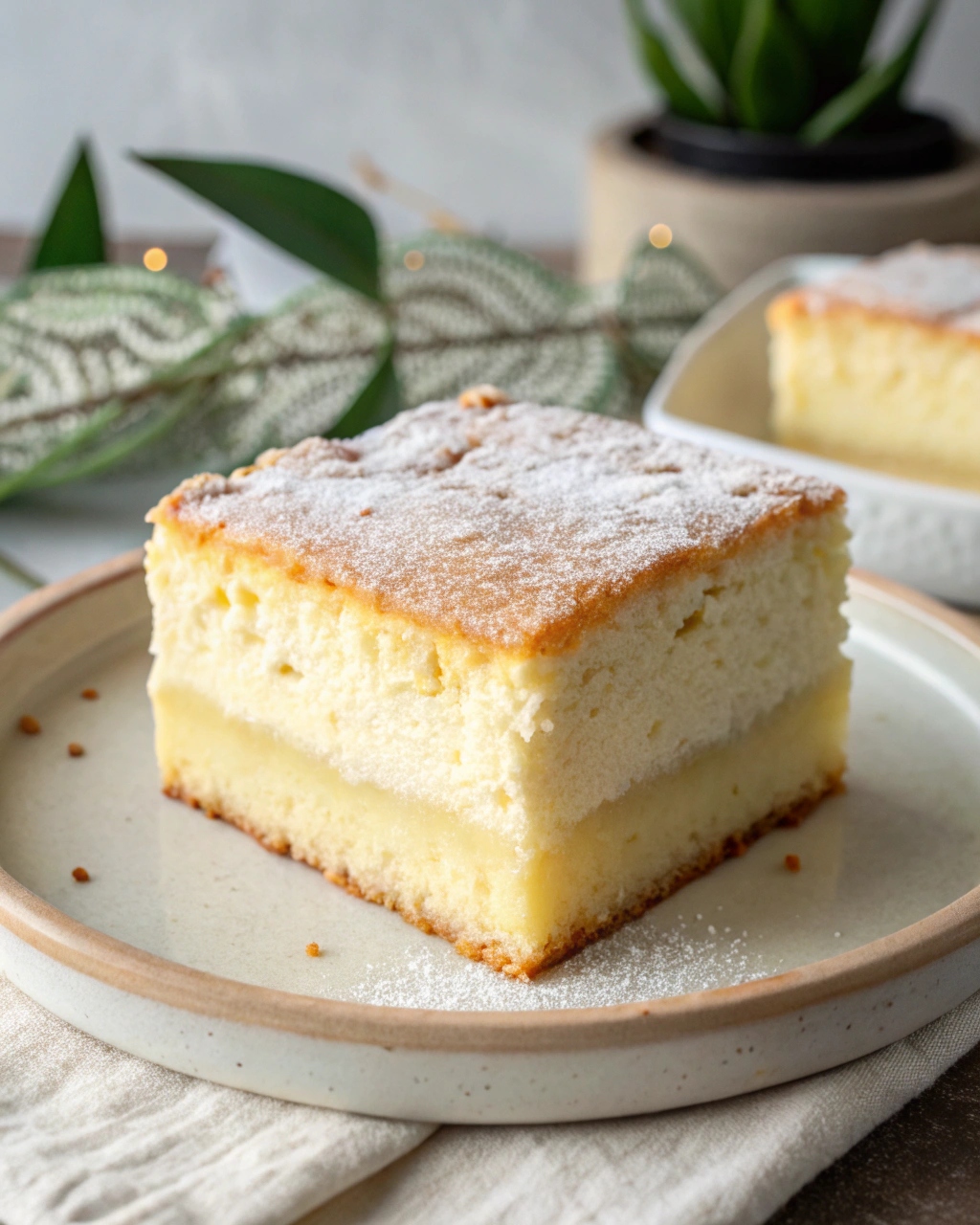
Magic cake is a surprisingly simple dessert that transforms a single batter into a cake with three distinct layers: a tender sponge on top, a creamy custard in the middle, and a delicate base at the bottom. This recipe combines eggs, sugar, butter, milk, and vanilla into a batter that bakes into a visually stunning and irresistibly light cake. Finished with a dusting of confectioners’ sugar, it’s elegant enough for guests yet simple enough for a weekday treat.
Why You Will Love This Recipe
You will love this magic cake because it feels fancy but is incredibly easy to make. The layers form naturally without complicated techniques, delivering a dessert that is light, creamy, and slightly custardy. It’s perfect for impressing friends, serving at tea time, or enjoying as a delicate after-dinner treat. Plus, it uses basic pantry ingredients and comes together quickly.
Magic Cake
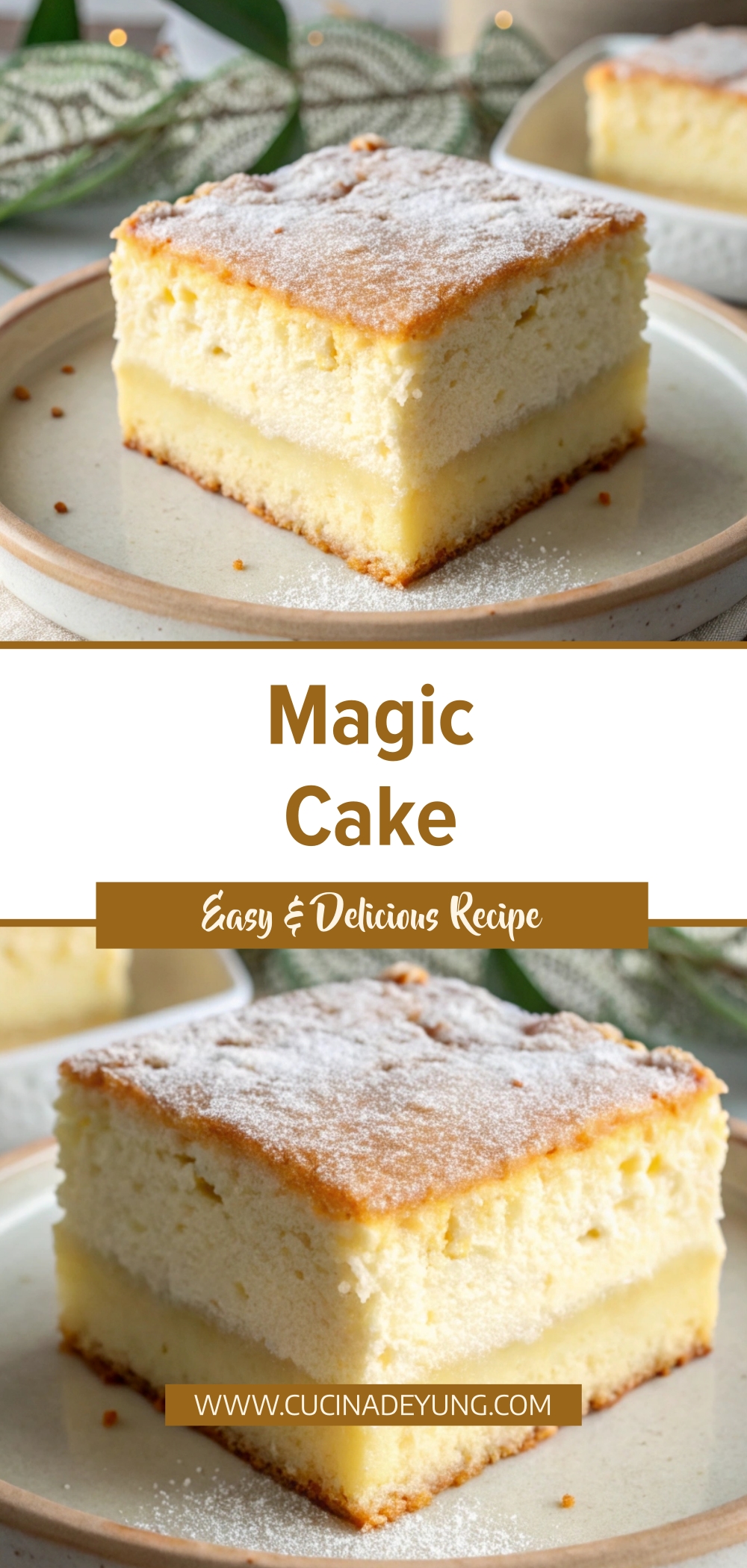
Magic cake has become a beloved dessert in home kitchens and online baking communities for its “wow” factor. With one simple batter, it separates during baking into three distinct layers: a thin sponge on top, a creamy custard in the middle, and a soft, firm base. The effect is almost magical, which is how it earned its name.
The secret to its layered texture lies in careful preparation. Whipping the egg whites until stiff peaks form creates air that lifts the top layer into a soft sponge. Meanwhile, the yolk mixture combines with milk and butter to form a creamy custard that gently sets in the oven.
Eggs are central to the structure of this cake. Using them at room temperature ensures the whites whip properly, creating maximum volume. This small detail makes a big difference in the final lightness and airy texture of the cake.
Sugar is incorporated in two ways: granulated sugar in the yolk mixture sweetens and stabilizes the custard, while confectioners’ sugar on top adds a subtle, elegant finish. The dusting also enhances the cake’s visual appeal, highlighting its delicate, golden top.
Butter adds richness to the custard and base, while vanilla extract provides aromatic depth. The flavor is subtle but comforting, allowing the texture and natural creaminess of the milk and eggs to shine.
Flour is folded gently to avoid deflating the whipped egg whites. This gentle folding preserves the airiness that separates the layers during baking, resulting in the characteristic soft sponge on top and dense custard at the bottom.
Milk acts as both a tenderizer and moisture provider. By using lukewarm milk, the batter integrates smoothly and helps the custard layer set properly. Cold milk can slow the incorporation and risk uneven layers.
The baking process requires a relatively low temperature (325°F) to ensure the custard cooks slowly without curdling. This slow bake allows the layers to form naturally and keeps the cake from cracking.
Cooling is another key step. Letting the cake rest for at least 30 minutes allows the custard to set fully, making slicing easier and revealing the distinct layers clearly.
Magic cake is versatile for serving. You can enjoy it plain with confectioners’ sugar, or top it with fresh berries, a drizzle of chocolate, or a dollop of whipped cream for extra indulgence. It’s light enough to pair with coffee or tea, making it perfect for afternoon gatherings.
The visual appeal of magic cake is almost as delightful as the taste. When sliced, the layers appear almost sculptural, showcasing a sponge, creamy custard, and soft base that looks professionally baked.
Because it uses simple ingredients, this cake is accessible to even beginner bakers. There’s no need for complex fillings or frosting to create a beautiful, impressive dessert.
It also makes a great make-ahead dessert. Bake in the morning and serve later in the day—the layers will remain distinct and creamy, providing an elegant presentation without last-minute stress.
Finally, magic cake is a reminder that simple techniques and thoughtful attention to texture can create something extraordinary. It’s a cake that feels special, tastes delicate, and truly earns its “magic” reputation.
Servings & Time
- Servings: 6–8
- Prep Time: 15 minutes
- Cook Time: 50–70 minutes
- Total Time: 1 hour 15 minutes
Ingredients
- 4 large eggs, separated, at room temperature
- ¾ cup granulated sugar
- ½ cup unsalted butter, melted
- 1 teaspoon vanilla extract
- ¾ cup all-purpose flour
- 2 cups lukewarm milk
- 2 tablespoons confectioners’ sugar, for dusting
Instructions
- Preheat oven to 325°F (165°C). Grease an 8-inch baking dish.
- Beat egg whites in a large bowl until stiff peaks form. Set aside.
- In another large bowl, beat egg yolks with granulated sugar until light and fluffy (about 2 minutes).
- Add melted butter and vanilla extract to the yolk mixture; beat until smooth.
- Fold in flour gently until just combined.
- Slowly beat in lukewarm milk until incorporated.
- Fold egg whites gently into the batter in two additions, keeping as much air as possible.
- Pour batter into the prepared baking dish.
- Bake 45–70 minutes, until the top is golden and slightly firm.
- Allow cake to cool for 30 minutes.
- Dust with confectioners’ sugar before serving.
Tips
Room temperature eggs: Ensure eggs are at room temperature to whip whites properly.
Folding technique: Fold gently to preserve air in egg whites and achieve distinct layers.
Baking time: Oven temperatures vary; check at 45 minutes, the cake should be golden and slightly set.
Serving ideas: Top with fresh berries, whipped cream, or a light drizzle of chocolate.
Storage: Store covered in the refrigerator for up to 2 days; serve chilled or at room temperature.
Magic Cake
Ingredients
- 4 large eggs separated, at room temperature
- ¾ cup granulated sugar
- ½ cup unsalted butter melted
- 1 teaspoon vanilla extract
- ¾ cup all-purpose flour
- 2 cups lukewarm milk
- 2 tablespoons confectioners’ sugar for dusting
Instructions
- Preheat oven to 325°F (165°C). Grease an 8-inch baking dish.
- Beat egg whites in a large bowl until stiff peaks form. Set aside.
- In another large bowl, beat egg yolks with granulated sugar until light and fluffy (about 2 minutes).
- Add melted butter and vanilla extract to the yolk mixture; beat until smooth.
- Fold in flour gently until just combined.
- Slowly beat in lukewarm milk until incorporated.
- Fold egg whites gently into the batter in two additions, keeping as much air as possible.
- Pour batter into the prepared baking dish.
- Bake 45–70 minutes, until the top is golden and slightly firm.
- Allow cake to cool for 30 minutes.
- Dust with confectioners’ sugar before serving.
Notes